- Lucky begins his utterance with a rebuttal, why?
- In context, who do Puncher and Wattman represent?
- Why does Lucky say quaquaquaqua? What does it mean?
- What's the reference behind a white beard?
- What does he mean when he relates apathia, aphasia, athambia to divinity?
- If Miranda means "admired" in Latin, why do those suffer like the divine Miranda?
- What image does Lucky paint of heaven and hell? Is it cliche? Is he mocking it?
- Is he stuttering when saying "Acacacacademy of Anthropopopometry?
- In context, who do Testew and Cunard?
- What is he saying about the labors of men?
- ". . .in spite of the strides of alimentation and defecation. . .strides of physical culture. . .of penicillin and succedanea. . ."(46) What is he saying about human development?
Wednesday, October 29, 2014
Homework 10/27
Lucky's Speech

Sunday, October 26, 2014
Character Analysis: Lucky
1. What is your character like? What is he not like?
He is devoted to Pozzo's word and desires; obedient and loyal. He is weary yet devoted to carrying all the baggage and following all of Pozzo's rude commands. He is without his individual personality or sense.
2. Identify the objects your character interacts with?
Lucky interacts with all the items he is carrying for Pozzo: the luggage, the stool, the whip. What is seemingly his own, is his hat.
Lucky interacts with all the items he is carrying for Pozzo: the luggage, the stool, the whip. What is seemingly his own, is his hat.
3. Describe HOW your character interacts with the other characters. Use specific examples!!!
Lucky interacts with Pozzo as slave to master. He is obedient and devotedly unphased to the mistreatment in Pozzo's orders, such as his asking to step back and forth, or to move his chair slightly and then back.
Lucky interacts with strangers very disagreeably. He is defensive and distant: when approached and provoked he kicked Estragon violently. When asked about for his bones, he was non-responsive.
4. How does your character change? How does your Character behave in act 1? How does your character behave in act 2?
Lucky becomes more active and alive throughout the play. In Act 1, he is silent and sleeping, only active when loudly ordered by Pozzo. In Act 2, he is more active but only through order by Pozzo, being that he dances and "thinks".
Lucky becomes more active and alive throughout the play. In Act 1, he is silent and sleeping, only active when loudly ordered by Pozzo. In Act 2, he is more active but only through order by Pozzo, being that he dances and "thinks".
5. How does your character make sense of his world? What does he think? How does he think?
Lucky doesn't make sense of the world, but only of what Pozzo tells him. When provoked to "think", he has no sense of the world, purely babble of subjects without connections.
Lucky doesn't make sense of the world, but only of what Pozzo tells him. When provoked to "think", he has no sense of the world, purely babble of subjects without connections.
Monday, October 20, 2014
1) Write 10 or so sentences putting Godot in the context of the "Power of 10" video.
This video and this play bring the viewer to challenge their realm of understanding.
Beginning with something the average human can understand through life experience, we accept and relate to the situation. In the video, this was the picnic, and in Godot, it is the emotions and thoughts provoked through interactions with others; something all can grasp. Then there is a careful movement for the audience through a transcendental experience of questioning the reality.
By bringing in micro- and macroscopic views of the universe we know and perceive, the video walked the audience through an illumination of reality limited, then alternatively limitless from the boundaries we construct through our "understanding". Godot brings in near ridiculous interactions between people, so ridiculous that it challenges the everyday reality and consciousness we have constructed, and we ask "why?". Instead of multiplying by 10, Waiting for Godot multiplies the realms of possibility.
2) What do you think of Pozzo and Lucky? Why are they in the play? Choose some moments when you write about them.
Pozzo and Lucky cause the protagonists and the audience to challenge their understanding of right and wrong, while recognizing the complexity within connections between people. When they first meet Lucky, they are immediately worried for his well-being, representing the belief against "inhumane" use of another's life. With growing interaction between the travelers, the relationships developed, and the men were all happy with enslavement. A challenging experience indeed.
3) How is Didi different than Gogo?
Didi is generally more aware and assertive. Gogo is forgetful and acts quickly with faint heart.
4) What are these two talking about, for what, for why?
They are discussing many things; their struggles, stories and possibilities. They ponder on these things to pass the time or escape a misunderstood reality.
5) How is your life like Didi and Gogo's?
I am constantly questioning my reality, as these 2 protagonists. I act with generally random responses in accordance to curiousty, always pondering the "larger" items of life.
6) If this play is not about God, claim 3 other things, ideas that the play is actually about? Point to parts of the play to support your claim.
As we had discussed in class, friendship is definitely a theme within this book. Gogo and Didi have a clear loving dependance on each other, illustrated at the beginning of both Act1 and Act2, when Didi firsts sees Gogo he ponders his well-being and then emplores him for an embrace.
Other than God, it seems confusion is a theme; too much info and then, not enough. Gogo and Didi question reality so often, constantly contradicting themselves, their confusion is quite apparent. In Act2 Pozzo is a mess of confusion, illustrated by his blindness. Lucky's whole speech is epitome confusion overwhelmed.
Finally, it is about patience in belief. Gogo and Didi have no idea who or what Godot has to offer, yet they know they should wait for them, so they do, with such patience.
7) Is this play cynical? What makes us insecure? How much do people act out of their insecurity? What's the flip side of insecurity?
Some aspects of this play is cynical; Maybe Didi is cynical because he is so very intent on waiting for Godot to relieve his curiousity. It makes us insecure because we are forced to question as the protaganists do, though it can cause security if one can answer the question.
Wednesday, September 24, 2014
Naomi Klein on Climate Change and Energy Alternatives
-Conventional Oil to Tar Sand Oil; Natural Gas to Fracking Gas. Destructive transition pushed by politicians and ignored by citizens.
-Climate Change actions can be done with a simple rearrangement of money...it just needs to be supported!
-Gas/ Oil companies will ignore carbon/ 2 degree limit, "declaring war with life on earth".
-Bold national policies w/ deadlines and accountability + multiple small-scale solutions + no to fossil fuels.
Wednesday, September 10, 2014
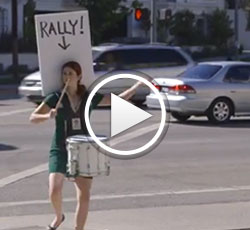
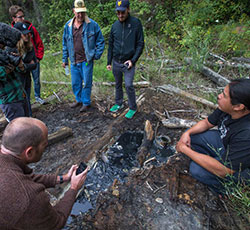
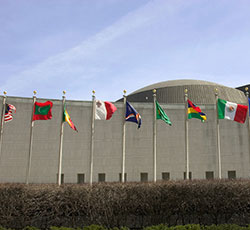
Recent email I recieved..
I have to awaken and attend this class in 6 hours, so no time to sort.
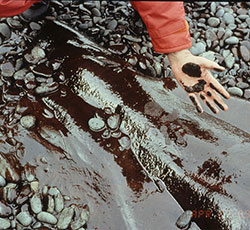
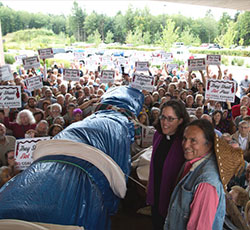
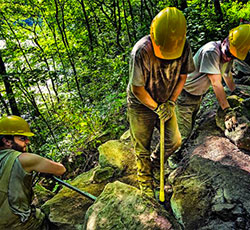
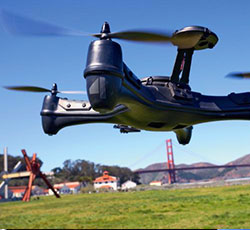
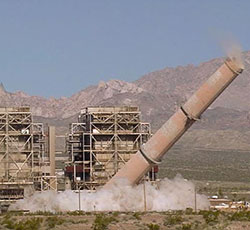
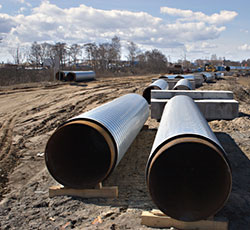
Though this covers many real time examples of what we're learning in The Last Hours of Ancient Sunlight, so I'd thought I share.
Join the Sierra Club, a great Special Interest Group that supports our natural future!!

|

















Sunday, September 7, 2014
3 Major topics from "The Last Hours of Ancient Sunlight" that interest me...
1. Severity of tree loss at the present time, and the possibility to replenish.
-". . .over 300 tons of topsoil are lost worldwide every minute as governments and the agricultural corporations that produce most of America's crops look the other way."
2. Access to safe water; data consistent with conditions now.
-"Since only about one-half-of 1 percent of the planet's water is drinkable and accessible to public water systems, at this rate of consumption, the human need for fresh water will outstrip the entire planet's replenishable supply by 2025- before we run out of oil."(103)
3. The addictive realities and consequences of the media.
-". . . our culture's most pervasive and insidious 'drugging agent' is television."(130)
Tuesday, August 26, 2014
Climate Change video response
Vicki Arroyo: Let's prepare for our new climate.
This video provided a directional chill pill to the frantic humans fearing impending doom - right before they tune out and go back to caterwauling the new Nicki Minaj song in their 40 minute showers. Vicki Arroyo immediately refused the public to stay shy to the serious effects of climate change, providing a clear-cut visual representation of the real world consequences, but held the viewers hand as she walked through the very possible solutions. By surprising the thinker with a truth that there are no experts in this uncharted climate situation, and acknowledging that communities will proceed with stationarity unless they are encouraged to adapt, she made it clear that the time is now to take action so we may thrive, and not just survive.

This video provided a directional chill pill to the frantic humans fearing impending doom - right before they tune out and go back to caterwauling the new Nicki Minaj song in their 40 minute showers. Vicki Arroyo immediately refused the public to stay shy to the serious effects of climate change, providing a clear-cut visual representation of the real world consequences, but held the viewers hand as she walked through the very possible solutions. By surprising the thinker with a truth that there are no experts in this uncharted climate situation, and acknowledging that communities will proceed with stationarity unless they are encouraged to adapt, she made it clear that the time is now to take action so we may thrive, and not just survive.
Subscribe to:
Posts (Atom)